
The Philosophers Are in Rennes,
and the Sun Showed Up Too
Three days, one obscure Breton philosopher, four journal editors, and the eternal question: how does one begin?
May 2026 Rennes School of Business
It takes a certain kind of conference to open with a nineteenth-century Breton philosopher that even most philosophers have never heard of. EBEN 2026 is, evidently, that kind of conference.
The European Business Ethics Network descended on Rennes — Brittany’s capital and, it turns out, an entirely reasonable place to grapple with humanity’s deepest questions — for three days of debates, panels, and doctoral workshops on the theme of new beginnings. The sun, apparently a fellow traveler, came along for the whole ride.
“We each have only one life; however, we can begin anew several times…”
The philosophical tone was set by Ghislain Deslandes, who opened proceedings with a portrait of Jules Lequier — a little-known Breton thinker whose central obsession was the question of freedom itself, distilled into the deceptively simple provocation: how to begin? If you have never found yourself lying awake at night wondering about the ontological conditions of a fresh start, Lequier would like a word.
From metaphysics, the conference pivoted neatly to something that keeps academics awake for entirely different reasons: academic publishing. An editorial panel brought together four journal editors — Punit Arora (Business & Society), Yoann Bazin (Business Ethics Quarterly), Jeffrey Moriarty (Journal of Business Ethics), and Julia Roloff (Society and Business Review) — moderated by Célile Ezvan with the kind of calm authority that suggests she has refereed thornier debates than this one.
The discussion offered what doctoral students everywhere actually want from an editorial panel: frank talk about what journals are looking for, what reviewers really mean when they ask for “minor revisions,” and how to survive the process with one’s intellectual dignity more or less intact. There were, reportedly, no casualties.
Four editors, one moderator, zero consensus on the word limit — a perfectly ethical outcome.
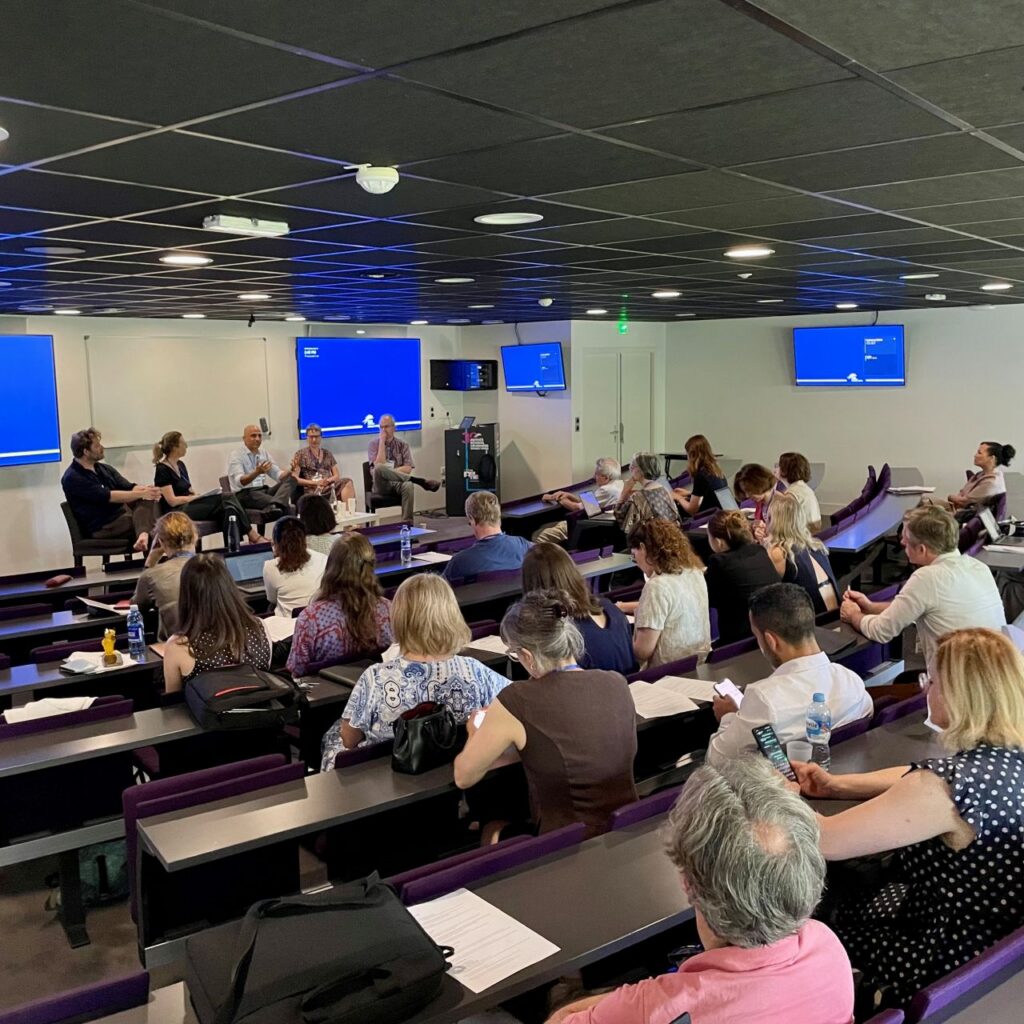
Over the three days that followed, scholars gathered to explore new beginnings at the personal, organizational, and governmental levels. Which is to say: everything from the moment you decide to quit a bad job, to the moment a government attempts to reform itself, was on the table. Ambitious, yes. But then, Lequier would have approved.
The Rennes sunshine — apparently non-negotiable in early summer Brittany — provided an irresistible metaphor that conference participants deployed freely, and quite rightly. There is something clarifying about doing ethics outdoors, or at least within easy reach of it.
What EBEN 2026 demonstrated, above all, is that business ethics as a field is not suffering from a shortage of questions. The theme of new beginnings turned out to be more capacious than it first appeared: personally, it asks what it means to change; organisationally, it asks what institutions owe their people when they transform; governmentally, it asks whether reform is ever really a beginning or merely a continuation by other means.
Lequier, from wherever he is, presumably found all of this very satisfying.



Leave a Reply